
Part 08 of 08 · Power, water & roads
Infrastructure, energy and resilience
Make the basics work better.
A connection is not enough. People need services that keep working.
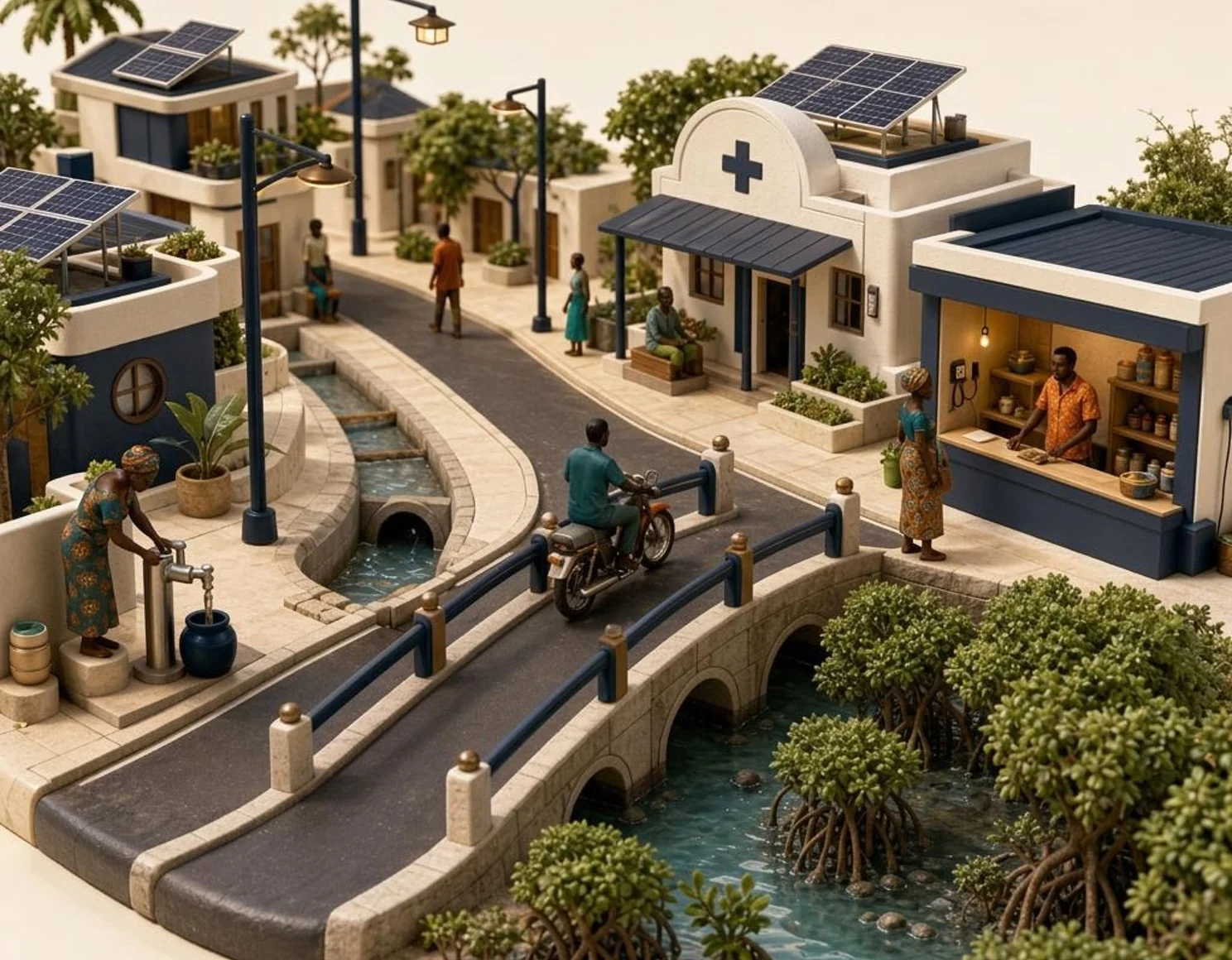
What we will do
Three practical steps
A shop needs power it can depend on. A community needs a water point that still works after opening day.
- Repair
- Keep working
- Maintain
Repair before replacing
Maintain useful roads, pumps, power equipment and public facilities before building more.
Connect people to essentials
Prioritise routes and services that reach markets, schools and care.
Plan for the long term
Include drainage, climate risks, maintenance costs and accessible non-digital service options.
From the full programme
Delivery safeguards and conditions
Reliable, not only connected
Grid rehabilitation, metering, loss reduction and maintenance planned together.
Essential users first
Health facilities, water systems and schools get priority in reliability planning.
Honest about renewables
Renewable energy is not automatically free: financing, networks and maintenance still cost money.
Funded tariffs
Lifeline tariffs targeted and funded. No unfunded freezes that hide losses.
How to judge progress
Check the result
- Are outages shorter?
- Do water systems work?
- Are repairs completed and maintained?
2031 delivery target
Average outage time index
- 2027 baseline
- 100 (index)
- Target
- 50 (index)
Goal: 50% less average outage time per customer by 2031, against a verified 2027 baseline.
Source: manifesto p.45Full chapter in the manifesto: pp.45, 46, 47.